Confessions of a Political Animal

January 4, 2012

I want to talk about welfare reform. Liam Byrne won’t let me.

Filed under: Labour Party,Poverty,Public spending — Political Animal @ 9:11 pm

I want to talk about welfare reform. Liam Byrne won’t let me.

Resheath your pens, denizens of the Fourth Estate. This isn’t a tale of shadow cabinet ministers cracking down on free expression by humble bag-carriers.

Over the New Year holiday, the forces of Twitter were unleashed on the shadow secretary of state for work and pensions. He knew they would be. He wanted them to be. Otherwise he wouldn’t have pre-briefed the Daily Mail in advance of his not-massively-controversial-when-taken-on-its-own Guardian piece on welfare reform. Not being a paper that puts many coins in the nuance meter, the Mail duly obliged with a piece heavy on the rhetoric of ‘scroungers’, ‘cheats’ and ‘evils’.

The Mail article predicted a fight with ‘the left’, a prediction that even Old Mother Shipton could probably have managed to get right. Though when the fight immediately came, those ranged against the ‘new line’ on welfare included large sections of the Labour centre and right as well. Again, Byrne won’t mind. Some have said he’s a Blairite who still sees getting into a scrap with both the intra-  and extra-Labour ‘left’ (however defined) as a vote winner. Being increasingly disinterested in such labeling, I’ll simply describe him as a politician doing what a certain breed of politician has always done – seeking identity through conflict. It’s a tactic as old as the hills and generally about as useful for gaining votes as said hills.

Twitter, like the Daily Mail, isn’t a great place for nuance. It provided very little over those days. A lot of the condemnation that Byrne received, particularly over the Mail piece, was more than justified. Sure, there’s those who can’t see the words ‘welfare’ and ‘reform’ together on a page and not immediately label the writer as a Thatcherite lickspittle. But there were many who pointed out precisely where the language of ‘the scrounger’ leads us. To the demonisation of the vast majority of genuine benefit claimants, to finger-pointing, to misplaced blame. To the steadily growing instances of hate crimes against the disabled, to the suicides, to the stigma and to the political space it gives to the forces of reaction in the two governing parties to chip away still further at the welfare settlement.

These, by themselves, are more than good enough reasons not to engage in such easy, throw-away rhetoric, even if the words that appear under your actual byline are far more measured. But there is a further reason: by doing so, you in fact close down the debate on welfare reform and make genuine reform all but impossible. You condemn the British welfare state – the Beveridgian inheritance Byrne proclaims himself to be an heir of – to another decade of managed decline.

Let me be honest – I don’t think the British welfare state works. That doesn’t mean I want to throw every recipient of benefits on the breadline. For probably somewhere in the region of 99% of claimants, I would be happy to die (metaphorically at least) in the last political ditch to ensure a continued guarantee of those benefits. But I’m not necessarily prepared to offer even so useless a sacrifice for the system that calculates and writes that cheque. The Welfare State is a post-war creature, predicated on full employment, jobs for life, stay-at-home mothers, the nuclear family and predictable cycles of boom and recession. Like a vast, gothic cathedral, it is a magnificent edifice. The very scale and noble purpose of it can make the most secular heart sing. But we’ve tried patching it up to make it more suitable for the modern age. It’s worked in places – the tax credit system is doing a passable job of keeping the rain from leaking through the sacristy roof, for example – but there’s only so far this can go.

The British welfare state is inflexible, complex, user-unfriendly, faceless and unpersonalised. When I make those criticisms, that doesn’t mean I want a replacement which is less generous or more austere to those in need. In fact, I want to see a system which doesn’t lead to billions in benefits going unclaimed – as many have pointed out, that, in terms of scale,  is the true scandal, not the relatively limited benefit fraud.

But I also know that one of the key pillars of the post-war welfare settlement is legitimacy in the eyes of the public. I’ve canvassed enough Labour heartlands (and non-Labour heartlands) to know that this is eroding. A lot of that is due to misreporting and misplaced rhetoric, based on a very limited number of genuine case of welfare state failure. But tell me that the average Labour voter doesn’t like the language of ‘scroungers’ and ‘cheats’ and I will laugh in your face.

That, however, is not an excuse to perpetrate it. By doing so, we simply enter an arms race with the Tories which we cannot win.

A political party cannot ignore public opinion; nor should it believe it cannot play a part in shaping it. The counsel of despair which is governance by the top-line findings of opinion pollsters leads to a non-courageous style of government which would never, for example, have seen Labour Home Secretaries abolish the death penalty or lower the age of consent. Rather than demonising the old welfare settlement, and particularly not those who depend on it, you address the concerns through a new settlement in which the majority can have confidence.

Soaring unemployment is creating a new influx of welfare state users, from a wide range of social backgrounds, including large numbers of graduates and professionals. Not only does this render a shift to generally abusing welfare recipients as politically short-sighted, it also misses that opportunity to build a new, legitimated, welfare settlement. The ‘new unemployed’ will quickly discover the shortcomings of the current system – the petty bureaucracy,  the low payments, the unwelcoming JobCentrePluses, advisers who, whilst committed, are going to struggle with this influx. They will demand change, improvement. And they have the political clout to do so.

This new unemployment is a personal and economic tragedy, yet it is also a political opportunity to forge a new consensus. A welfare state that is based around work where possible, and a comfortable existence where it isn’t; that personalises its offering for each client; that provides genuine training and (properly) paid work opportunities; that doesn’t stigmatise or dehumanise the long-term claimant. And yes, maybe Byrne is right to suggest a greater role for the contributory principle – I am not going to attack him for wishing to emulate parts of the often highly successful welfare systems of much of northern Europe.

So, I should be excited by the opportunities for welfare reform, and for my party to be spearheading them. But I’m not. Because instead, Liam Byrne has catapulted us into a pointless, degrading and actually rather childish debate about  linguistics. Rather than a victory for those who want to debate welfare reform, even if we don’t agree with every dot and comma of Byrne’s stance, he has handed a victory on a plate to the conservatives (lower case ‘c’ intentional) on both left and right who will countenance no reform. He has removed the option of nuance and made it harder for genuine welfare radicals to put their heads above the parapet. And by failing to link in policies on job creation to the narrative on welfare reform, he has left many people shaking their heads as to the disconnect with the most pressing economic debate.

I disagree with Liam Byrne on a lot, but I don’t think he’s an evil benefit-snatcher. I’m not, as Owen Jones puts it, ‘ashamed to share a party card with him’. I joined a broad church party, and by doing so happily accepted that I’d be sharing a card with Byrne. But I thought the leadership had learnt some lessons on the linguistics of welfare reform. To my mind, Ed Miliband’s biggest mistake since taking over the leadership was the line in his Coin Street speech in which he appeared to qualify himself to judge a man on incapacity benefits’ ability to work. This soured an otherwise thoughtful and intelligent speech on responsibility ‘at top and bottom’, and rightly caused anger. At party conference, Miliband seemed genuinely contrite and understanding about why that had been an error. I don’t think he, personally, will make it again. But he has allowed Byrne off the leash to make that mistake on his part, and by doing so has damaged the prospects of a new welfare settlement being at the heart of Labour’s next manifesto, where it belongs.

May 10, 2011

In Search of the Air-Conditioned Desert

Filed under: Uncategorized — Political Animal @ 10:57 pm

Over Easter I travelled by train, bus and ferry from St Pancras to the Red Sea, through Europe, Turkey and the Middle East. I’ve written up an account of my journey over at my travel blog – http://travellinganimal.wordpress.com/in-search-of-the-air-conditioned-desert/

February 14, 2011

New Travel Blog

Filed under: Uncategorized — Political Animal @ 12:06 am

Apologies that for various reasons this blog has been pretty quiet recently – I’ve yet to decide if, or when blogging will recommence here. I have, however, started a new site chronicling my occasional travels, here. Do pay a visit if long-winded travelogues are your sort of thing.

September 20, 2010

Cross with care: Evidence-less policy making

Filed under: London Politics,Transport — Political Animal @ 7:11 pm
Tags: , , ,

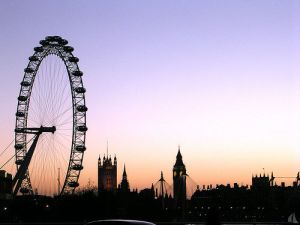
Back in July, Transport for London announced it was consulting on the removal of 145 sets of traffic lights across the capital, half of which included lights with pedestrian facilities. All part of the Mayor’s obsession with his mythical goal of ‘smoothing traffic flow’, which increasingly seems to take priority over the needs of every other road user. The outcry from residents, the London Assembly and borough councils is well documented elsewhere. I was alerted to the remarkable nature of some of the proposed removals by the fact that several were within spitting distance of my then central London workplace, involving pedestrian crossings on a busy road popular with tourists, shoppers and school groups. Removing the crossings in question would have led to around 300m between crossing facilities, encouraging pedestrians to dice with often fast moving traffic.
Many of the other proposals looked equally ill-thought through, so I stuck in a Freedom of Information Act request to TfL, asking for their evidence base in choosing the pedestrian crossings earmarked for removal. Specifically I asked for what, to me, seemed a sensible data set that ought to be part of any judgement as to the continued need for a pedestrian crossing – and which would not be particularly onerous to collect:

- the number of times each crossing was used by pedestrians on an average day;

- the distance from the nearest alternative pedestrian crossing;

- average traffic speeds at the crossing location;

- data relating to traffic congestion caused by existence of the crossing.

After it took two months for TfL to respond, I was expecting a pretty hefty evidence base. Alas no.

“I can confirm that we do not hold the information you require.”

So, what were the selections based on?

“These signals were selected following a review of traffic flows and historical accident data and, where the sites include pedestrian facilities, observed pedestrian demand levels.”

Oddly, this last point sounds remarkably like what I asked for, but never mind. You have to question how useful historic accident data is – in many cases the crossings will have been in place for decades and the nature/levels of pedestrian or traffic uses will have been completely altered in that timescale. Nor does it appear that there was any quantitative approach to considering which crossings actually had any serious effect on traffic flows. The lack of an evidence base certainly increases the perception that these crossings have been picked almost at random, hence examples outside schools or tourist attractions being amongst their number. Evidence-less policy making towards an evidence-less policy.

One small bit of good news, however. Apparently, further analysis

“may include the collection of some of the data you have requested.”

Good. But who knows if a completely different – and somewhat more sensible – list of traffic lights for removal would have been drawn up if some of that data had been used in the first place?

June 21, 2010

Time for the street-fighting council

On May 6th 2010, Labour won by a small landslide.

Yes, you did read that correctly. Because as the party fell to defeat in parliamentary seats across the country, it swept to power in London borough after London borough. Before the elections, of 32 London boroughs, Labour had majority control of just 7, running a further one in a coalition and one more as a result of having the elected mayor. By the evening of Friday 7th May, Labour had overall control of 17 boroughs, running one more as a minority administration. In 9 of the remaining 14 boroughs, Labour increased its number of seats. Eighteen months before the elections, I suggested that if the general and local elections were to coincide, this might prove to be to Labour’s benefit. So it turned out, but the results were far beyond what I predicted in that post. There is something more than just an increased turnout behind these very good results; and I believe that it has a direct bearing on how Labour councils in London, both newly-elected and returned, should conduct themselves over the next four years.

The easy answer to ‘Why did Labour do so well in London’ is that the party’s core vote turned out. But the core vote cannot deliver 18 boroughs – in reality (as was tested in 2006), it can be guaranteed to deliver about 5 boroughs. What turned out across London on May 6th was what I will describe as the ‘Core+’, a coalition of broadly progressive forces more akin to that which delivered two Livingstone victories than to that behind the 1997 landslide. With a Conservative victory nationally seen as certain, voters with personal or political reasons to fear the onset of Osbornomics (the radical, ideology-driven downsizing of the state using deficit reduction as a pretext) turned out, only partially in hope of preventing this, but equally to try to ensure that savage cuts would be opposed at a local level. For better or worse, this coalition of forces overwhelmingly saw Labour as the party best placed to deliver that opposition.  (more…)

May 28, 2010

Oona: a history and ambition mismatch

Being young-ish and dull, I have a Salieri-like disposition to beat up on those who appear to be young and bright. This colours my view of the world in a rather unpleasant way, so what I’m about to write needs to be viewed in that context.

Learning that Oona King was indeed running for the Labour nomination for the London mayoralty is rather like getting confirmation that Lord Lucan is dead: something that most people have accepted for some time. This meant I had a partially formed opinion already of what I felt about her candidacy, but the past week has crystallised that for me. I am now more convinced than ever that if the Labour electoral college was to nominate King, then Boris Johnson might as well start writing his speech for the 2012 Olympics opening ceremony.

 Over the past 5 days, there has been a concerted effort in sections of the Labour-leaning blogosphere and Twit-osphere to convince nay-sayers such as myself that King has ‘changed’; that to attach too much credence to her past as a committed Blairite is in some way unfair. Now, I’ll accept that people change. I even accept that some politicians change, although that list is mainly limited to Napoleon Bonaparte and Tony Benn.

This narrative is at least honest – it accepts that Old Oona, the undissenting New Labour MP simply does not fit the settled London view of what its Mayor should be like – basically, it wants independent-minded mavericks. It also accepts that the Old Oona, unbending in her support for a morally questionable invasion of Iraq, who achieved the unthinkable of losing a super-safe inner London seat on a swing of 26%, does not have the kind of electoral record that would appeal to the party and affiliate members who will select the candidate. (more…)

May 24, 2010

A Job Description

This is a joint post by Political Animal and Lost Lucan

The brave new world has dawned, and in the hard cold morning following the battle we can survey the wreckage: the promise of retrenchment with a nasty twist. Cuts, and a re-pointing of the welfare state to the benefit of the better off, with a hike in VAT rather than employer’s National Insurance being used to fill the Treasury’s coffers. From amidst the dust and rubble we rise, clutching the few belongings remaining to us, to start again down the road to government.

And so who will lead us down the twisting path ahead? In some respects it matters not: the hats already thrown into the ring, and those promised to follow adorn the heads of a talented bunch, all of whom could make a decent stab at the task. We are fortunate in having an acting leader who is more than capable of setting the tone for the months and years ahead. No, what matters more is what policies we choose to pursue, around what principles we rally.

The government we face will be nasty, brutish and, sadly, not quite so short. In these times, it is imperative that we offer our new members and the electorate a distinct and decent platform, that we provide a strong voice for employees, the less well off and everyone else who does not fit into the Cameron mould and who would otherwise comprise the great ignored.  To that end, we believe that a successful Labour leader must pursue a progressive set of policies which promote not just equality of opportunity but equality of outcome, with an acceptance that the structural causes of poverty outweigh any impacts of so-called agency in preventing social mobility.

The Whigs had four policy areas to all but sacrifice upon the altar of ambition. We also propose four areas which, in our view, a successful candidate for the Labour leadership should  pursue. They are by no means the only important ones, but they strike at our core values, values which should not be offered up for any price. (more…)

March 28, 2010

Boris and Transport: Easy Words, Broken Promises

Two years and half way through Boris Johnson’s first – and I trust, only – term as London Mayor and the opposition parties on the London Assembly rightly took the opportunity last month to step up scrutiny of the Mayor’s…ahem…interesting approach to his manifesto pledges.

Johnson’s 2008 manifesto was a fascinating mix (rather like the man himself) of the sweeping, the generalised, the populist and occasional flashes of obsession with random bits of minutiae. But what was partially evident at the time of it’s publication, and has become even more so since, is that it was written with very little input from anyone who had the foggiest idea what they were talking about. Nowhere was that more clear than in the transport manifesto, saved from oblivion by The Guardian here. Everyone knows its headline-grabber: the removal of the bendy bus and the introduction of a new Routemaster – a policy which it has since become clear has no significant economic, environmental, safety or public utility case to its name. Sadly, this was not a lone case. And a badly thought-out, media-driven manifesto means a manifesto that gets broken all too easily, with just this week a new entrant to the fast growing list emerging.

“It is not good enough…that the Tube doesn’t run later on Friday and Saturday nights. [...] It would be a major benefit to Londoners if the Tube ran one hour later on Friday and Saturday nights, and we want to see this happen.” (p.20)

If it wasn’t good enough when Johnson wrote his 2008 manifesto, he’ll have to say that it still isn’t good enough when/if he writes the 2012 version. This week saw the death of this pledge after TfL announced that it was impossible to implement later running and that this would remain merely ‘an aspiration’. This should have come as no surprise to anyone who has had a passing interest in London’s transport pre-2008 – so we can assume it came as a surprise to the Mayor. In his second term, Ken Livingstone consulted on running a one hour later service on Fridays and Saturdays, with commencement of service at weekends cut back by one hour to ensure the amount of time available for engineering and upgrade works was not curtailed. From the consultation it became evident that the later start would leave the many commuters, particularly shift workers, who relied on an early Underground train at weekends heavily inconvenienced, so in 2006 TfL proposed a compromise: running trains 30 minutes later on both Fridays and Saturdays and cutting back starting time on Saturday mornings by one hour whilst leaving Sundays unaffected (this would have meant that Saturday and Sunday start up times were the same). However, by February 2007 it had become clear that negotiations with unions over changed working hours had ground to a halt, and the proposal was shelved.

Despite all this, Johnson in his manifesto reverted to the original proposal of an hour extra for both Friday and Saturday, strangely neglecting to mention that this would need two hours to be cut from somewhere else. Even if this barely-disguised Thatcherite could have succeeded where Livingstone failed with the RMT and ASLEF, he would either have had to at least partially break his manifesto promise by implementing the 30-minute extension plan or taken a potentially highly unpopular decision to leave early-morning commuters without an Underground service. And we all know Johnson doesn’t like making unpopular decisions. So, this manifesto promise was setting Johnson up for a fail, as anyone with a bit of nouse could have told him. The Mayor is trying to claim that upgrade work is what is preventing him from keeping his pledge, but this is clearly rubbish: whilst upgrade work does take place at night, so too does the day-to-day engineering work necessary to keep the Underground running. Even when the upgrades are complete, it is almost certain that any extension of operating hours in the evening will have to be matched by a curtailment in the morning. (more…)

February 5, 2010

Living in an Alternative (Vote) London

But who? And how?

The Prime Minister’s proposals for electoral reform are too limited and too late. But despite that I support them.

Not only because I believe the introduction of Alternative Vote is a key step on the way towards the introduction of a genuinely proportion (and more psephologically interesting) electoral system but also because the rabid response of the right has convinced me that Brown must be on to something. This has ranged from Cameron’s none-too-subtle barbs about rigging the electoral system at PMQs, through to the ill-advised playing of the Mugabe card by Reading East Tory Rob Wilson MP*.

As I like to give all politicians the benefit of the doubt (stop sniggering at the back, there) I’m prepared to be convinced that if we weren’t 100 days from a general election then the response would be a bit more considered. Because if this is an attempt to rig the electoral system, it would be an astoundingly cack-handed way of doing it. Alternative Vote makes no significant amendment to the UK’s constitutional settlement, it is highly unlikely to break the dominance of the two major parties and will leave the vast majority of seats in the same hands as currently, albeit with a little more legitimacy for the sitting MP.

Whether the AV transition is likely to happen this time round or not is a moot point. But I remain convinced in some degree of historical inevitability of electoral reform in the UK, and AV seems a very likely first step whenever it comes around. So what would it mean? I don’t have the time or inclination to go through each of the UK’s 650 constituencies, but I thought I’d have a run through the London region: not only because it’s my home, but also because we have some experience of this sort of system. The Supplementary Vote system used for electing the Mayor is a hybridised form of AV, in which the voter is limited to expressing two preferences, rather than being able to number all the way down the ballot paper. So there is a bit of evidence, albeit somewhat unwieldy, as to how voters might react to a preferential system. (more…)

January 13, 2010

European Leftwatch: The year to come

Ivo Josipović, the new Social Democrat president of Croatia

With 2010 now well underway, and with one election under it’s belt already, it is high time for a quick look ahead at the prospects for the Socialist International‘s member parties over the course of the next 12 months (an overview of what European Leftwatch is about can be found here).

2009 was a pretty mixed bag for the democratic socialist and social democratic parties of Europe, who for a variety of reasons have failed in many cases to reap any significant rewards from the continuing crisis of laissez-faire capitalism. The biggest story was, of course, the disastrous showing for the SPD in Germany, ending the grand coalition and ushering in (an already rather tarnished looking) right-wing coalition. The centre left was also heavily defeated in Bulgaria and Macedonia and failed to break out of opposition in Albania. Positives included victories in Greece and Iceland at the expense of incumbent centre-right governments (although both new leftist governments may well be seeing their victories as poisoned chalices by now) and the Partido Socialista’s re-election in Portugal.

With the centre left firmly out of power for the foreseeable future in France, Germany and Italy, that leaves only Britain and Spain of the major EU powers in Socialist International hands (and if you want to add Poland to the list of major powers, that shows no signs of shifting left any time soon). I don’t think the vast majority of readers of this blog are going to need reminding of the prospects for the British social democrats during 201o; basically, it seems highly unlikely that 2010 is going to be a vintage year for the European left. Below, we take a quick skim over national elections that either will or are likely to be held during the course of the next twelve months, starting with a calendar of those with fixed dates, then moving on to those with flexible term lengths. (more…)

Next Page »

Theme: Rubric. Blog at WordPress.com.

Follow

Get every new post delivered to your Inbox.